Charging, without the guesswork
Power Bank Calculators & Buying Guides
Calculate power, check travel compatibility and choose the right charging setup for your devices. Every result shows the formula behind it, the assumptions used and what the numbers cannot tell you.
- Every formula shown
- 123 power bank models
- Travel data only where verified
Start with your task
Current Anker offers
Anker runs its own discount codes. The four we can currently point you to sit on one page, each with the condition it needs and the dates the brand published, plus a copy button.
- $20 off — Orders over $150
- $9 off — Plus Member Benefits 1-month membership · no auto-renewal
- $10 off — Orders over $100
- 15% off — One-time use only
The discounts are set by the brand. Validity and the final price are decided by anker.com, not by this site. We may earn a referral commission if you buy through the anker.com link on this page. It does not change the calculators' estimates or their conclusions.
How many charges will your power bank give?
A quick estimate. The full calculator lets you enter the device battery in Wh, change the efficiency range and see the arithmetic step by step.
Estimated full charges
Estimated charges, not a guaranteed result. Efficiency is assumed at 70–75% and can be edited in the full calculator.
Do you need a travel adapter for your destination?
This short check reads the plug you own against the destination data we have verified. Countries without verified data deliberately return no answer.
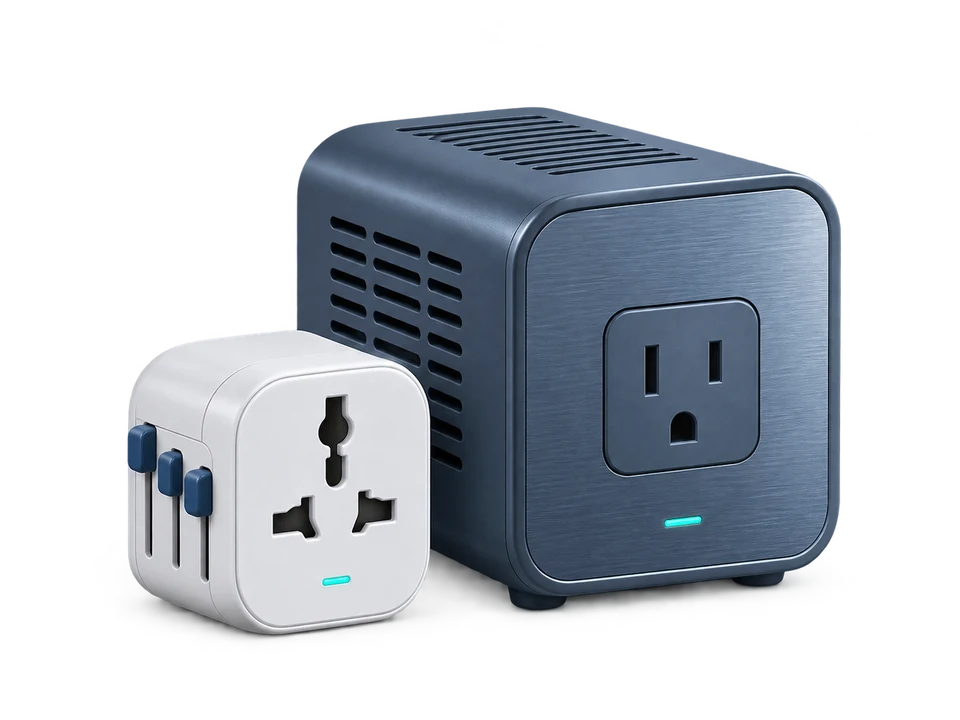
A plug adapter does not convert voltage. It changes the shape of the connection only. High-power appliances such as hair dryers and heaters are outside the scope of this site, and no automatic safety answer is given for them.
Plan the whole kit, not one part at a time
The other pages on this site answer one question each. The planner answers the one that decides what goes in the bag: given the devices you are taking, the charger and cable you already own, and the sockets at your destination, what is actually missing?
It can only say three things, and two of them are not "yes".
Your kit is sufficient
Every check that can be closed from your own labels passes, and nothing that matters is left unread. Pack what you listed.
You are missing X
A specific part is provably short — a port, a cable class, a plug shape — named as a specification, never as a product.
Needs verification
A figure that decides the answer is not established yet. The planner names the field to read instead of guessing it.
No model names, no links, no prices and no ratings appear in any answer, because the site publishes none. "No product is needed" is a normal result.
Explore by situation
Travelling to Italy
Type L sockets, 230 V at 50 Hz, plus the hybrid-socket caveat that most guides skip. Read the Italy guide.
Deciding between an adapter and a converter
Two different devices with two different jobs. See which one your trip needs.
Only your phone, one charger
Read the label on the charger you own before buying a second one. The 65W vs 100W comparison shows how the label is read.
The number on the box looks too good
mAh and Wh measure different things. Convert between them before comparing two packs.
How this site works
Formulas are published, not hidden
Watt-hours come from Wh = mAh × V ÷ 1000, and estimated charges from power bank Wh × overall efficiency ÷ device battery Wh. Voltage is always the cell nominal voltage, never a USB output rail such as 5 V or 20 V.
Verdicts can be "not enough information"
When a charger's per-port allocation is not documented, or a country's supply data has not been verified, the answer is Needs verification — never a friendly guess. If your existing gear already covers the job, the site says so.
No prices, ratings or "best" lists. This site does not publish live prices, star ratings or ranked product claims. We may earn a commission from marked referral links. This does not affect compatibility verdicts. Full disclosure.
Blog
Practical guides to charging at home, at work and abroad.